
A goldsmith's whole workshop in one system, so no piece and no deadline goes missing.
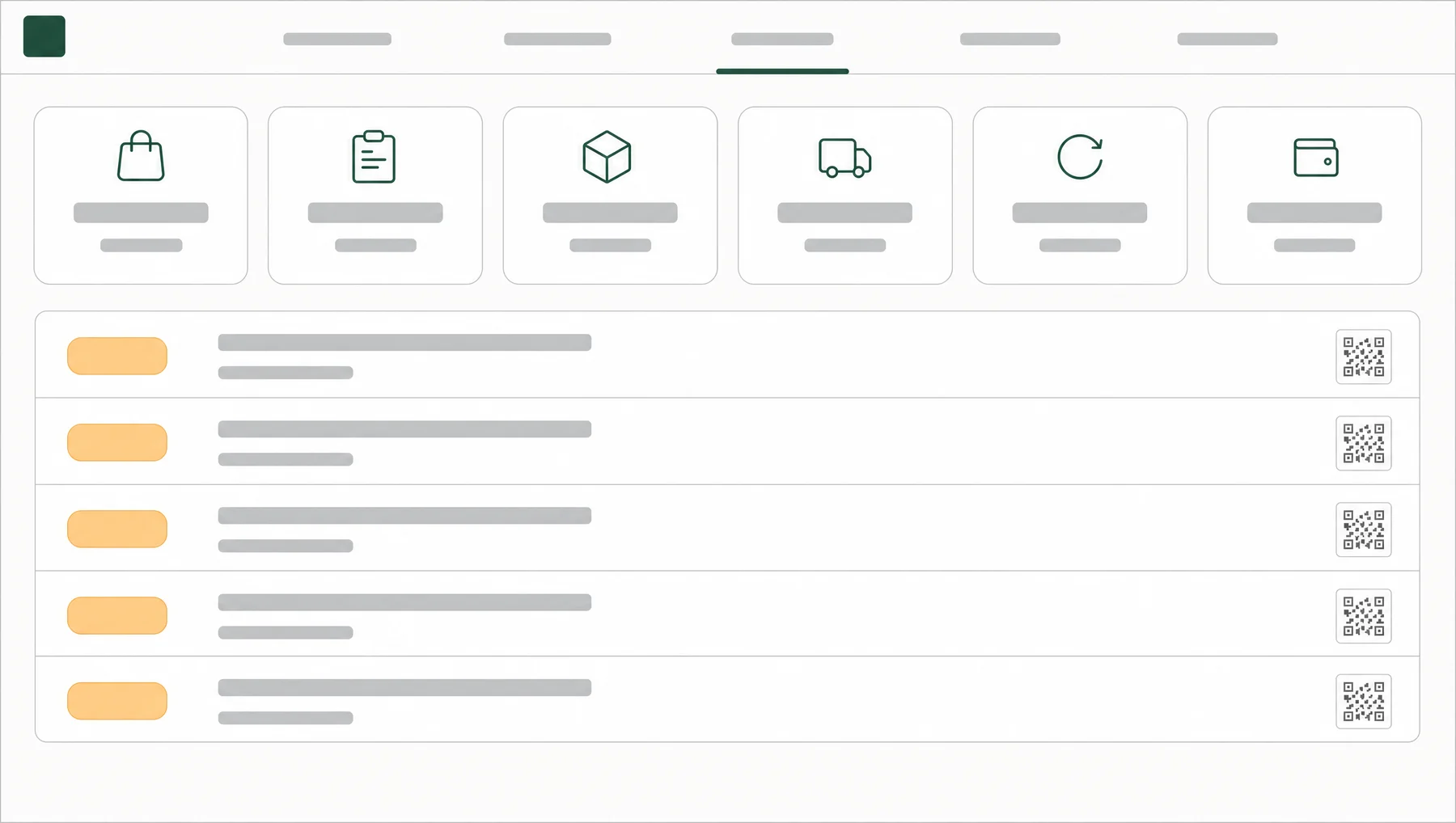
A custom CRM built around how a goldsmith actually works: orders, work management, accounting, gold buying and card payments in one place, every piece scanned at every step, and a mobile app the whole workshop uses from the bench.
Context
Who they are.
Atelier Crincoli is a goldsmith. Pieces come in, pass through several hands, go out to suppliers and come back, get finished, and are eventually collected by the client who owns them. An ordered process matters here more than in most businesses: each item is small, valuable, often irreplaceable, and belongs to someone who is waiting for it.
The problem
What they walked in with.
They needed one system covering work management, accounting, gold buying and payments. But the hard part wasn't the feature list. It was building something the goldsmiths could adopt without changing how they already work. A workshop that has to bend itself around new software stops using the software.
Our approach
How we worked.
Fitted to their process, not ours
We started from how the atelier already runs and shaped the system around it. The people at the bench kept their process; the software learned it. That's the reason it stuck.
One system instead of several
Work management, accounting, gold buying, and card and POS payments all connected into a single CRM, so the same job doesn't get re-entered in three places.
Every piece scanned, every step
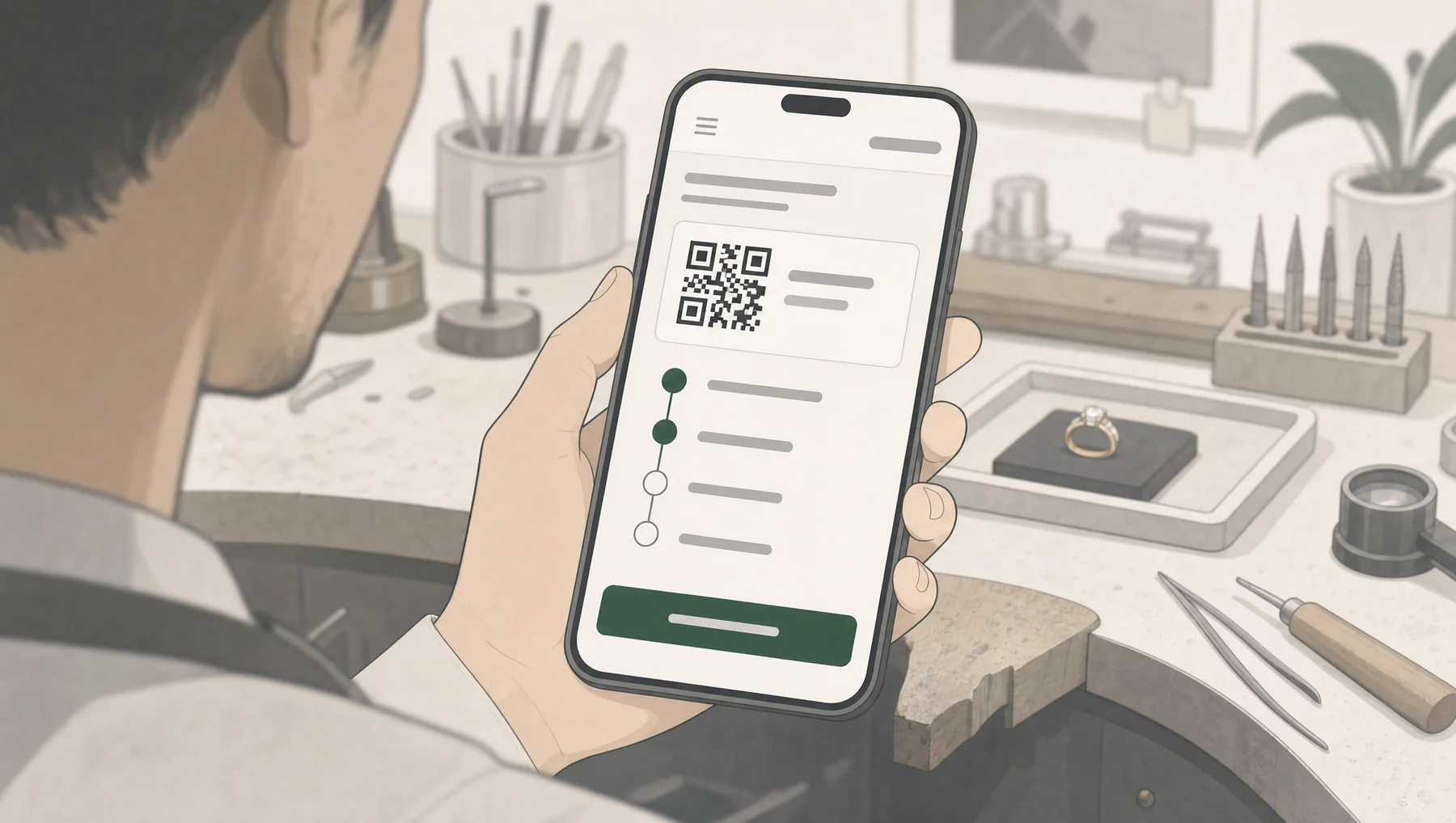
QR labels are printed in-house and integrated into the flow. A piece is scanned at each stage of its journey, from intake through to the moment the client collects it, and every movement is logged.
A mobile app for the bench
Every employee can move a job forward from their phone: advance a piece, update a project, keep invoicing current, without walking to a desk.
Highlights
The interesting parts.
- Every piece is scanned at every step, from intake to client pickup, so where something is and what has happened to it is never a question.
- Work management, accounting, gold buying and card payments live in one system rather than several that don't talk.
- The goldsmiths' existing process survived intact. The software was tailored to it, which is why adoption held.
Stack
What we built it on.
Timeline
How it unfolded.
Learn the process
Sit with the atelier and map every step a piece goes through before writing anything.
The core system
Orders, clients, invoicing and work management, with accounting, gold buying and payments connected in.
Scanning & mobile
QR label printing wired into the flow, and the mobile app that lets the whole workshop keep it current.
Ongoing
Support and continued development as the atelier's work changes.
More case studies
Habitects AG
Owning the tech side of a bathroom-renovation platform, all the way through a merger.
Part-time CTO for Habitects AG: keeping their B2B bathroom shop running while conceiving, staffing and shipping the configurator that turns a filled-in form into a rendered bathroom, then handing the whole thing over cleanly when the company merged.
ReadArthouse Kinos
A new website and ticket shop for Zürich's most iconic cinemas.
Concept, project lead and engineering for a new Arthouse website and online ticket shop, replacing an ageing WordPress site. The design was outsourced to Unstated International, and the ticketing integration was built against an API that had no usable documentation.
Read